
Email Marketing vs. SMS Marketing: Which Is Better for Small Businesses?
Small-business owners comparing email marketing vs. SMS marketing usually want one clear winner. Unfortunately, the honest answer is not as dramatic as a championship belt and theme music. Email and text messaging solve different communication problems. Email gives you room to educate, tell stories, showcase products, and nurture customers over time. SMS reaches people quickly when timing matters and the message can fit comfortably on a phone screen.
So, which one is better?
For most small businesses, email is the stronger foundation because it supports a wider variety of content and customer journeys. However, SMS can outperform email when the message is urgent, brief, personal, and immediately useful. In many cases, the smartest strategy uses both channels—with permission, purpose, and enough restraint that customers do not begin hiding from your notifications.
This guide explains the strengths, limitations, costs, use cases, and practical differences between email and SMS marketing. By the end, you will know which channel fits your goals, when to combine them, and how to start without turning your marketing list into a witness protection program.
Email Marketing vs. SMS Marketing at a Glance
Before going deeper, here is the short version:
| Business Need | Email Marketing | SMS Marketing |
|---|---|---|
| Detailed education | Excellent | Limited |
| Immediate alerts | Good | Excellent |
| Visual storytelling | Excellent | Limited |
| Appointment reminders | Good | Excellent |
| Long-term nurturing | Excellent | Helpful as support |
| Flash promotions | Good | Excellent |
| Newsletters | Excellent | Poor fit |
| Quick customer responses | Moderate | Excellent |
| Content flexibility | High | Low |
| Risk of feeling intrusive | Moderate | High if overused |
Email is generally better for depth. SMS is generally better for speed.
However, this comparison is only the beginning. The best channel depends on what you are sending, who should receive it, and what you want them to do next.
What Is Email Marketing?
Email marketing uses permission-based email communication to build relationships with prospects and customers. It can include newsletters, promotions, service reminders, educational sequences, announcements, welcome messages, product recommendations, and follow-up campaigns.
Unlike a social media post, an email is delivered to an audience your business has built. You are not waiting for an algorithm to decide whether three people and someone’s aunt should see your content.
Email also provides room to communicate. A well-designed message can include:
- Headlines and supporting copy
- Photos and graphics
- Multiple products or services
- Customer testimonials
- Helpful tips
- Links to website content
- Calls to action
- Personalized recommendations
Because of that flexibility, email works well when a customer needs context before taking action.
For example, a remodeling company could send a seasonal planning guide with project ideas, photos, budget considerations, and a consultation link. A 150-character text would struggle to carry that assignment without developing tiny-message exhaustion.
What Is SMS Marketing?
SMS marketing uses text messages to communicate with people who have agreed to receive them. Common messages include appointment reminders, limited-time offers, event updates, back-in-stock alerts, order notifications, review requests, and short follow-ups.
Text messaging works because it is immediate and familiar. People keep their phones nearby, and most already use text as part of everyday communication.
However, that closeness creates responsibility. An unwanted email is annoying. An unwanted text can feel like someone walked directly into the customer’s pocket and started selling.
Therefore, SMS works best when the message is:
- Timely
- Brief
- Relevant
- Expected
- Easy to act on
- Worth the interruption
If the message needs six paragraphs, three images, a founder story, and a downloadable guide, it is probably an email wearing a text-message costume.
The Biggest Difference Is Depth Versus Immediacy
The central difference in email marketing vs. SMS marketing is how people experience each channel.
Email invites someone to spend time with a message. Text messaging asks for attention now.
That makes email a stronger option for:
- Explaining a service
- Sharing useful content
- Building trust over several messages
- Presenting multiple products
- Telling customer stories
- Delivering longer updates
- Sending branded newsletters
Meanwhile, SMS is better suited for:
- Confirming an appointment
- Announcing a short promotion
- Sending a deadline reminder
- Alerting customers to a schedule change
- Notifying someone that an item is available
- Requesting a quick response
- Providing a simple action link
Neither advantage is automatically more valuable. A dental office may gain more immediate value from reducing missed appointments through text reminders. In contrast, a consultant may need email to educate prospects before they are ready to schedule a call.
The business goal should choose the channel—not whichever platform sent the most persuasive sales representative to your inbox last Tuesday.
The Advantages of Email Marketing for Small Businesses
Email remains one of the most versatile tools available to a small business. It supports quick promotions, but it can also build relationships over months or years.
Email Gives You Room to Explain
Some purchases require more than “20% off today.” Customers may need to understand the service, process, value, timeline, and next step.
Email provides enough space to answer questions before the customer asks them. Moreover, it allows you to link readers to service pages, blog posts, booking forms, products, case studies, and other helpful resources.
Email Supports Visual Design
A branded email can feature photos, colors, buttons, product grids, reviews, and clear sections. Therefore, it works especially well for businesses that benefit from visuals.
Examples include:
- Restaurants
- Retailers
- Photographers
- Home improvement companies
- Salons and spas
- Event businesses
- Real estate professionals
- E-commerce stores
Email Works Well for Automated Nurturing
An email sequence can guide someone from initial interest to a decision.
For example, a new subscriber might receive:
- Start with a welcome message.
- Follow it with a helpful guide.
- Share a customer success story.
- Answer common questions.
- Finish with an invitation to schedule a consultation.
This sequence continues working after it is built. Of course, it still needs monitoring and improvement. Automation should save time, not preserve an outdated message from 2019 like a digital time capsule.
Email Can Serve Several Goals
The same email program can support sales, education, retention, referrals, events, and customer service. In addition, different audience segments can receive different content.
A current customer does not need the same message as a first-time visitor. Likewise, someone interested in website design should not receive six emails about a service they never viewed.
Email Is Usually Less Intrusive
People expect to check email on their own schedule. As a result, businesses generally have more room to send educational or promotional content without demanding immediate attention.
That does not mean “send whatever you want every morning.” Relevance and frequency still matter. Nevertheless, email usually offers more breathing room than text messaging.
The Limitations of Email Marketing
Email is useful, but it is not magical.
Inboxes Are Crowded
Your message competes with receipts, work correspondence, shipping notices, newsletters, school updates, password resets, and a store that apparently believes you need nine reminders about socks.
Therefore, subject lines, timing, sender recognition, and relevance matter.
People May Not See It Quickly
Someone may open an email hours or days later. Consequently, email is not always the best channel for an urgent schedule change or an offer expiring in two hours.
Design Can Break
Email clients display messages differently. A campaign that looks beautiful in one inbox may appear awkward in another. Mobile testing is essential because many readers will open the message on a phone.
Weak Lists Produce Weak Results
Buying a large list does not create a healthy audience. Instead, it can produce poor engagement, spam complaints, deliverability problems, and little genuine interest.
The strongest email list contains people who knowingly subscribed, purchased, requested information, or otherwise have a legitimate relationship with the business.
The Advantages of SMS Marketing for Small Businesses
SMS does one thing exceptionally well: it puts a short message in front of the customer quickly.
Text Messages Are Immediate
When an appointment changes, a reservation opens, or a promotion ends tonight, speed matters. SMS can deliver the information without requiring the customer to check an inbox or open an app.
Text Messaging Makes the Next Step Simple
A text can ask the customer to:
- Confirm an appointment
- Tap a booking link
- Reply with a question
- Redeem an offer
- Complete a purchase
- Leave a review
- Check an order update
Because the phone is already in the customer’s hand, the distance between message and action can be very short.
Reminders Are a Natural Fit for SMS
Service businesses can use texts to reduce missed appointments, confirm arrival windows, remind customers about estimates, or follow up after service.
For example:
Reminder: Your appointment with [Business] is tomorrow at 2:00 p.m. Reply C to confirm or call [number] if you need to reschedule.
The message is useful, expected, and easy to act on. That combination is where SMS earns its place.
SMS Can Create Timely Revenue
A restaurant can announce a quiet-night special. A salon can fill a last-minute opening. A retailer can promote a short sale. An event business can send a registration deadline reminder.
However, urgency must be real. If every text claims the customer has only three hours to act, your “urgent” marketing will eventually become background furniture.
The Limitations of SMS Marketing
Text messages earn attention, but that attention is easy to abuse.
SMS Has Limited Space
Long text campaigns are difficult to read and may be split into multiple messages. Therefore, the copy must be concise.
SMS Can Feel Intrusive
People use text messaging for family, friends, work, appointments, and urgent updates. A business entering that space too frequently can wear out its welcome quickly.
Every Message Needs a Strong Reason
“We have a blog” may work as an email subject. It is rarely important enough to deserve a text interruption.
Before sending, ask:
Is this message timely and valuable enough to appear beside conversations with the customer’s family and friends?
If not, use email.
SMS Requires Careful Consent and Opt-Out Handling
Marketing texts are governed by consent, do-not-call, carrier, platform, and other requirements. Businesses need an appropriate permission process, clear disclosures, records, and a reliable way to honor opt-outs.
Because rules vary by message type, technology, jurisdiction, and situation, businesses should obtain legal guidance for their specific program. “Someone typed their phone number into a form once” is not a complete compliance strategy.
Email Marketing vs. SMS Marketing by Business Goal
The easiest way to choose a channel is to start with the job the message must perform.
Welcome a New Subscriber
Better choice: Email
A welcome email has room to introduce the business, set expectations, deliver an offer, and point to helpful resources.
However, a welcome text can support the process by confirming enrollment or delivering an immediate coupon when the customer specifically requested texts.
Educate a Prospect
Better choice: Email
Educational content usually needs context. Email can explain a problem, share examples, answer questions, and guide the reader to a relevant service page.
Confirm an Appointment
Better choice: SMS
A short text is easy to see and answer. Email can provide the full appointment details, while SMS handles the timely reminder.
Promote a Sale
Better choice: It depends
Email works well when the sale includes several products, images, exclusions, or a longer timeframe. SMS works well when the offer is simple, relevant, and time-sensitive.
Announce a New Product or Service
Better choice: Email
The announcement may require photos, features, benefits, and links. Then, SMS can provide a brief follow-up for highly interested customers.
Fill a Last-Minute Opening
Better choice: SMS
A salon, consultant, trainer, or service provider can notify opted-in customers about sudden availability.
Share a Monthly Newsletter
Better choice: Email
Please do not text a monthly newsletter in twelve consecutive bubbles. Nobody has earned that.
Recover an Abandoned Cart
Better choice: Both, used carefully
Email can remind the shopper about the product and provide more context. Later, SMS may deliver a final concise reminder to customers who consented to texts.
Request a Review
Better choice: SMS for immediacy; email for context
A text can reach the customer soon after service. Meanwhile, an email can thank them, explain why feedback matters, and include additional support information.
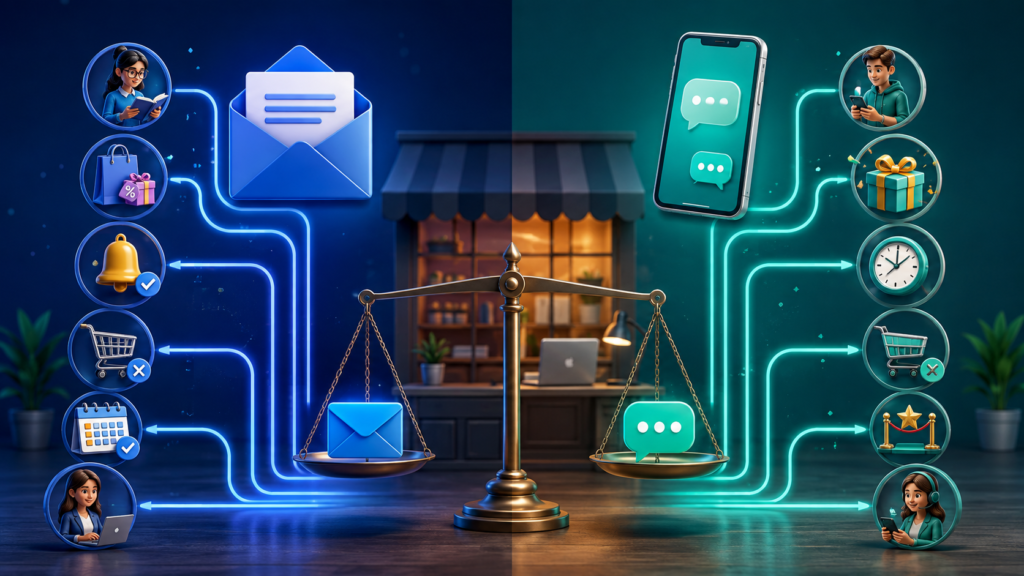
Which Channel Costs More?
Costs vary by platform, contact count, message volume, features, and professional management.
Email platforms often charge according to subscriber count, sending volume, or feature level. Meanwhile, SMS platforms may charge per message, per segment, per phone number, or through monthly packages.
At first glance, one email may appear cheaper than one text. However, cost should be measured against the business result.
A text reminder that prevents one missed appointment may pay for an entire month of messaging. Likewise, an automated email sequence that nurtures leads for a year can create value far beyond the cost of sending it.
Therefore, compare:
- Cost per delivered message
- Cost per click
- Cost per conversion
- Revenue per recipient
- Unsubscribe rate
- Customer retention
- Time required to manage the program
The cheapest campaign is not always the most profitable. A free platform sending the wrong message to an uninterested list is still expensive if it wastes time and damages trust.
Which Channel Gets Better Engagement?
You may see dramatic industry claims about email open rates or text-message engagement. Treat broad statistics carefully.
Your performance depends on:
- Audience quality
- Permission and expectations
- Message relevance
- Timing
- Offer strength
- Frequency
- Sender recognition
- Industry
- Call to action
- List segmentation
SMS often receives attention faster. Email usually produces deeper engagement because the message can contain more information and pathways.
Still, an open is not the same as a sale. A click is not the same as a qualified lead. Focus on the outcome that matters to your business.
For a service company, that may be booked appointments. A retailer may focus on revenue instead. Meanwhile, a consultant could measure completed discovery calls. Restaurants may track reservations or offer redemptions.
Email Marketing vs. SMS Marketing for Different Businesses
Different business models benefit from different channel mixes.
Local Service Businesses
Email can educate customers, share seasonal advice, explain services, and nurture estimate requests. SMS can confirm appointments, provide arrival windows, and follow up after service.
Best approach: Use email as the relationship channel and SMS as the timely service channel.
Restaurants
Email can feature menus, events, catering, and monthly news. SMS can promote a same-day special, reservation opening, or event deadline.
Best approach: Use text selectively. Nobody needs an emergency notification every time soup exists.
Retail and E-Commerce
Email works well for product launches, recommendations, stories, abandoned carts, and seasonal campaigns. SMS can support restock alerts, shipping updates, and short promotions.
Best approach: Coordinate both around browsing and purchase behavior.
Professional Services
Consultants, attorneys, accountants, and agencies often need to build trust before a prospect acts. Email supports educational content, case studies, and long-term nurturing. SMS is better for reminders and direct follow-up after consent.
Best approach: Let email do most of the explaining.
Salons, Spas, and Appointment-Based Businesses
Email can promote services, memberships, seasonal packages, and education. SMS can confirm appointments, fill cancellations, and encourage rebooking.
Best approach: Both channels can be valuable when scheduling data and consent are managed properly.
Nonprofits and Community Organizations
Email provides room for stories, impact updates, event information, and donation campaigns. SMS can send deadline reminders, urgent needs, and event-day updates.
Best approach: Use email to build the narrative and text to support timely action.
The Strongest Strategy Often Uses Both Channels
The email marketing vs. SMS marketing debate assumes you must choose one. In reality, the channels can work together without duplicating every message.
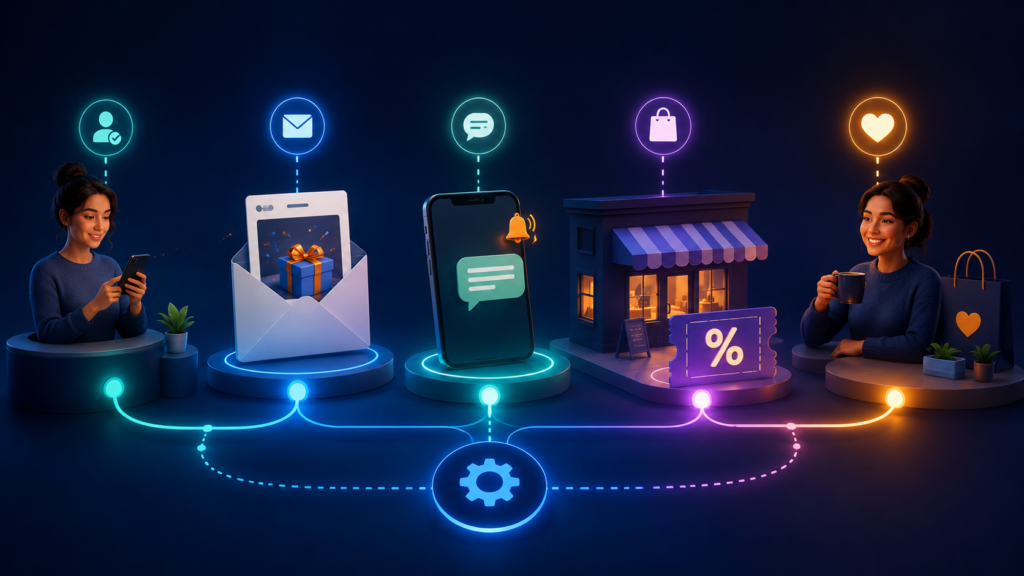
Consider this customer journey:
- A visitor joins the email list and separately agrees to receive texts.
- A welcome email introduces the business and delivers a helpful resource.
- A second email explains a relevant service or product.
- The customer books an appointment.
- SMS confirms the booking and sends a reminder.
- Email follows up with care instructions or helpful details.
- SMS sends a timely review request after the experience.
- Email keeps the customer connected with useful future content.
Each channel has a job. Email builds understanding. SMS handles moments.
Problems begin when businesses send the same promotion through email, text, social media, push notification, carrier pigeon, and possibly a note taped to the customer’s windshield—all within twelve minutes.
Coordination matters.
How to Avoid Overwhelming Your Customers
Using two channels does not give you permission to double the noise.
Instead, create communication rules.
Assign Each Channel a Purpose
For example:
- Email: education, newsletters, product stories, longer promotions
- SMS: reminders, urgent updates, brief offers, quick responses
Use Frequency Limits
Decide how often someone may hear from the business across all channels. Then monitor unsubscribes, complaints, and engagement.
Segment the Audience
Not every subscriber needs every message. Send information based on location, service interest, purchase history, engagement, or customer stage when appropriate.
Let Customers Choose
Give people clear expectations and preference options. Someone may want weekly email but only essential texts. Another customer may prefer short text offers.
Stop Sending What Is Not Working
If a campaign repeatedly produces weak engagement and high opt-outs, do not keep sending it because the calendar says Tuesday. Marketing automation should not become automated stubbornness.
A Simple Starter Plan for Small Businesses
You do not need twenty-seven automations on day one.
Start with a useful foundation.
Email Foundation
Build these first:
- Create a clear signup form.
- Send a welcome email.
- Add one helpful follow-up email.
- Plan a monthly or twice-monthly campaign.
- Build a re-engagement process for inactive subscribers.
SMS Foundation
After confirming the program’s legal and technical requirements, begin with:
- Establish a compliant opt-in process.
- Send a welcome or confirmation text.
- Add appointment or service reminders.
- Choose one highly relevant promotional use case.
- Test the opt-out process.
Combined Foundation
Map where each channel supports the customer experience. Do not add SMS simply because the software includes a button labeled “Send.”
For many businesses, a practical monthly rhythm might include:
- Two helpful or promotional emails
- Automated appointment texts
- One carefully chosen SMS promotion
- Triggered follow-up based on customer actions
The correct schedule depends on the audience and business. Start conservatively, measure the response, and adjust.
How to Build an Email and SMS List Properly
A list is valuable because people chose to hear from the business—not because someone found a spreadsheet containing 40,000 strangers.
Useful signup opportunities include:
- Website forms
- Checkout pages
- Booking forms
- In-store displays
- Events
- Lead magnets
- Customer portals
- Loyalty programs
However, email permission and SMS permission should be clear. Do not hide consent inside vague wording or assume that providing a phone number for an appointment automatically means the customer wants every future promotion.
Tell people:
- What they are signing up for
- Which channel will be used
- How often messages may arrive
- Whether message and data rates may apply
- How to opt out
- Where to find applicable terms and privacy information
Clear expectations improve compliance and list quality. Moreover, people who genuinely want the messages are more likely to respond.
Email and SMS Compliance Basics
This section provides general information, not legal advice. Marketing requirements can depend on the message, technology, location, industry, audience, and other details. Therefore, obtain advice appropriate to your program.
Commercial Email Requirements
The FTC explains that the CAN-SPAM Act covers commercial email, including business-to-business messages. Among other requirements, businesses must avoid deceptive headers and subject lines, include a valid physical postal address, provide a clear opt-out method, and honor opt-out requests.
Using an email platform or hiring another company does not automatically remove the sender’s responsibility. Consequently, review the complete FTC requirements and your platform settings before launching campaigns.
Marketing Text Requirements
Text-message marketing can involve the Telephone Consumer Protection Act, FCC rules, National Do-Not-Call requirements, carrier rules, state laws, and platform policies.
In general, businesses should obtain and document the appropriate consent before sending marketing texts. They should also identify the sender, provide required disclosures, honor revocation and opt-out requests, and avoid sending outside allowed hours.
The FCC states that automated or robotext marketing generally requires the recipient’s prior consent, subject to applicable rules and exceptions. Because these requirements continue to evolve, confirm the current rules for your program before relying on old templates or a blog post that has been circulating since flip phones.
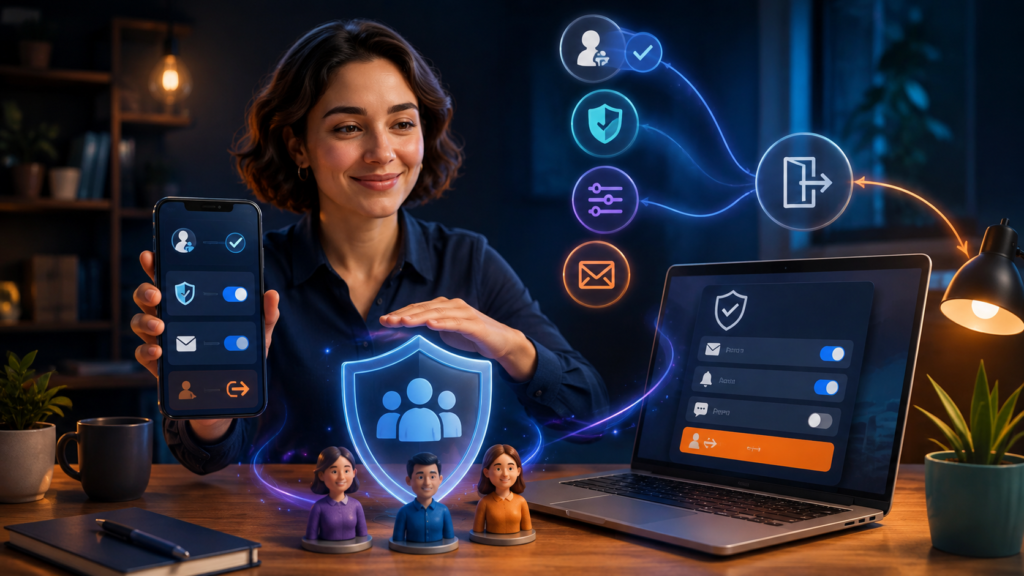
Good Compliance Also Builds Trust
Consent should not be treated as a tiny legal hurdle hiding beneath a form. It is part of the customer experience.
When people understand what they will receive, they are less likely to feel surprised or trapped. As a result, transparent programs often produce healthier engagement.
What Should You Measure?
Do not judge a channel by one campaign.
Track results over time and connect activity to business outcomes.
Email Metrics
- Delivery rate
- Click rate
- Conversion rate
- Unsubscribe rate
- Spam complaint rate
- Revenue or leads per campaign
- Performance by audience segment
Open rates can provide directional information, but privacy features and tracking limitations may affect accuracy. Therefore, place greater emphasis on clicks, conversions, leads, sales, and customer behavior.
SMS Metrics
- Delivery rate
- Click rate
- Reply rate
- Conversion rate
- Opt-out rate
- Appointment confirmations
- Offer redemptions
- Revenue per message
Combined Metrics
When both channels are used, examine the entire journey. A customer may first learn through email, act after a text reminder, and purchase later through the website.
Attribution is not always tidy. Customers do not organize their decisions for the convenience of your dashboard.
Common Email and SMS Marketing Mistakes
Sending Without a Strategy
“We should send something” is not a campaign objective. Define the audience, message, purpose, and next step first.
Treating Every Subscriber the Same
New leads, active customers, inactive customers, and recent buyers have different needs. Therefore, segment where useful.
Communicating Only When You Want Money
If every message asks for a purchase, customers will learn to ignore the business. Mix promotions with useful reminders, education, appreciation, and service.
Overusing Urgency
Not every offer is your “biggest sale ever.” If it happens twice a month, the phrase has resigned from meaning anything.
Neglecting Mobile Experience
The email may look beautiful, but the landing page must also work on a phone. Likewise, SMS links should lead to fast, simple, mobile-friendly pages.
Failing to Test
Test links, forms, discount codes, personalization fields, timing, and automation rules. Nothing makes a personal campaign feel less personal than “Hello, FIRST_NAME.”
Ignoring Replies
If customers can respond to a text or email, decide who monitors those responses. A message that invites questions should not lead into an abandoned inbox.
Email Marketing vs. SMS Marketing: Which One Should You Choose?
Choose email first when:
- You need to explain or educate.
- Your sales process takes time.
- Visual content matters.
- You want a newsletter or nurturing sequence.
- Your audience prefers less immediate communication.
- You are building a long-term content program.
Choose SMS first when:
- Timing is critical.
- The message is short and useful.
- Customers need reminders or confirmations.
- A quick reply or action is valuable.
- You have the proper consent and systems.
- The business can support responses promptly.
Use both when:
- Each channel has a clear job.
- Customers separately understand and choose the communications.
- The messages support one coordinated journey.
- You can manage consent, segmentation, automation, and measurement correctly.
If you are still unsure, begin with email. It offers more flexibility and is usually easier to use as the central relationship channel. Then add SMS for a few high-value, time-sensitive moments.
Build a System Instead of Sending Random Messages
The real question is not simply email marketing vs. SMS marketing. The better question is: What communication system will help your business stay connected without wasting customers’ attention?
Email gives you room to educate, build trust, and nurture long-term relationships. SMS gives you speed, visibility, and a simple path to immediate action. Used carelessly, either channel becomes noise. Used strategically, they can bring customers back, reduce missed opportunities, and create a more consistent customer experience.
Start with permission. Give every message a purpose. Match the channel to the job. Then measure the business result instead of celebrating a dashboard full of opens and clicks that produced nothing else.
If building lists, writing campaigns, planning automations, managing consent, and measuring results sounds like another department your small business does not currently have, Go Local Max can help. Our Email and SMS Marketing services help businesses create coordinated campaigns that stay useful, personal, and focused on real customer action.
Schedule a free consultation with Go Local Max and let’s build a communication strategy your customers appreciate—not one that makes them throw their phone into a decorative pond.