
Best Social Media Platform for Small Business
The best social media platform for small business marketing is the one your customers use and your team can manage without losing its mind. For many local businesses, that means Facebook or Instagram. LinkedIn usually makes more sense for B2B companies, while TikTok and YouTube are strong choices for businesses that can teach, demonstrate, or entertain through video.
That is the short answer. The longer answer is more useful because “get on Instagram” is not a strategy. It is barely a complete sentence.
Every platform asks something different from a business. For example, Instagram wants strong visuals. TikTok wants personality and quick video. Meanwhile, LinkedIn rewards useful professional insight. YouTube takes more work, but a good video can keep bringing in viewers long after a Facebook post has vanished into the feed.
So, let’s choose a platform based on your actual business—not because someone’s nephew said Threads is “about to be huge.”
Last reviewed: August 2026

Start With Your Customer, Not the App
Small-business owners often ask which platform is best as if there is one correct answer hiding under a desk at Meta headquarters.
There isn’t.
A neighborhood restaurant and a payroll consultant have different customers. They sell differently, too. After all, one can win attention with a slow-motion cheese pull. The other probably should not try.
Before choosing a platform, answer four questions:
- Who usually buys from you?
- What do they want to see before they trust you?
- Can your business create that content consistently?
- What should someone do after seeing it?
The last question matters more than it seems. A post can earn 400 likes and produce no calls, appointments, orders, or website visits. That is pleasant, but likes do not generally pay the electric bill.
Your goal might be visibility. However, it could also be website traffic, leads, store visits, bookings, or repeat purchases. Once the goal is clear, platform selection becomes much easier.
The Quick Platform Comparison
| Platform | Usually best for | Content that fits | Main drawback |
|---|---|---|---|
| Local services, community businesses, restaurants | Photos, updates, events, reviews, local video | Organic reach can be inconsistent | |
| Visual services, retail, food, beauty, fitness | Reels, photos, Stories, transformations | Needs a steady stream of visuals | |
| B2B services, consultants, recruiters | Expertise, case studies, opinions, lessons | Weak fit for many consumer purchases | |
| TikTok | Personality-led brands and younger audiences | Short, useful, entertaining video | Requires comfort with frequent video |
| YouTube | Businesses customers research before buying | Tutorials, comparisons, demonstrations | Takes more time to produce well |
| Products and planning-based services | Ideas, guides, products, inspiration | Not ideal for every industry |
Use this table as a starting point. It is not a legally binding social media custody agreement.
Is Facebook Still Worth It for Small Businesses?
Yes. Facebook is not trendy, but neither is a dependable work truck. Both can still get a lot done.
Pew Research Center continues to list Facebook among the most widely used social platforms among American adults. More importantly, many people use it to find local recommendations, check business pages, browse events, read comments, and ask neighbors whom they trust.
Facebook is often a practical choice for:
- Contractors and home-service companies
- Restaurants and local retailers
- Community organizations and nonprofits
- Real estate professionals
- Family-focused services
- Businesses that serve adults over 30
For example, suppose someone needs a plumber. They may ask a local group, search Facebook, inspect a company’s recent work, and read the comments. As a result, an active page helps the business look alive, available, and accountable.
That does not mean every post needs to be a sales pitch. In fact, nonstop promotion makes a page feel like a person at a cookout who keeps handing everyone business cards.
Share completed work, useful tips, employee introductions, customer stories, local involvement, and occasional offers. Then answer comments and messages. Social media becomes more valuable when the business remembers the “social” part.
Facebook’s Biggest Weakness
Your followers will not see everything you publish. Organic reach changes, competition is heavy, and the feed is crowded.
Still, Facebook works well as a trust-building home base. It becomes even more useful when strong organic content supports carefully targeted advertising.

When Instagram Is the Better Choice
Instagram makes sense when customers want to see the result before they buy.
Think about salons, boutiques, restaurants, photographers, gyms, wedding vendors, interior designers, landscapers, and remodeling companies. Their work gives them something visual to show.
A potential customer can view the haircut, kitchen remodel, floral arrangement, catered event, or finished patio. That proof answers an important question: “Can this company actually do what it says?”
Reels can also introduce the people behind the business. That matters because customers are often choosing between several companies that appear similar on paper. Therefore, a little personality can break the tie.
Useful Instagram content includes:
- Before-and-after transformations
- Short demonstrations
- Frequently asked questions
- Behind-the-scenes clips
- Customer features
- Product close-ups
- Quick tips
- Team introductions
However, Instagram gets difficult when a business has nothing original to show. Four months of generic stock photos featuring suspiciously cheerful people in a conference room will not create much trust.
You do not need magazine-quality photography. In fact, clear phone photos and honest video often work better because they feel real.

LinkedIn Is Usually the B2B Winner
If your customers are business owners, executives, managers, or other professionals, LinkedIn deserves a serious look.
People arrive there expecting business conversations. Therefore, a post about sales leadership, cybersecurity, employee retention, or operational problems feels natural. The same post may land with a thud on Instagram between a puppy video and somebody’s vacation photos.
LinkedIn is a strong fit for:
- Consultants
- Business coaches
- Professional service firms
- Recruiters
- Software companies
- Commercial service providers
- Training companies
- B2B agencies
The best posts usually teach something, challenge a common assumption, or tell a useful story. Case studies work well, too, especially when they explain the problem and process instead of shouting about a 400% increase with no context.
Personal profiles often outperform company pages because people prefer hearing from people. So, let the owner or an expert have a point of view. Besides, a business voice does not need to sound like a committee wrote it during a four-hour meeting.

Should Your Business Be on TikTok?
TikTok can generate enormous visibility, but attention is not the same as buying intent.
The platform works best when a business can explain, demonstrate, reveal, react, or entertain on camera. A mechanic can explain a strange engine sound. Bakers might show how a complicated cake comes together. Meanwhile, a lawyer can answer a common question without pretending to be in a courtroom drama.
TikTok is especially useful for brands targeting younger adults. It can also help businesses with charismatic owners, interesting processes, or surprising expertise.
You do not have to dance. Please print that sentence and place it near whoever controls the content calendar.
Instead, make videos that answer real questions. Show mistakes. Explain prices. Compare options. Share something customers misunderstand. A useful 30-second explanation can outperform a polished commercial because it gives viewers a reason to stay.
The TikTok Catch
Video takes time, and the platform moves quickly. Also, one strong video does not create a strategy. Your business needs enough ideas and energy to keep testing.
If everyone freezes when the camera turns on, another platform may be a better starting point.
YouTube Is Slower—and That Can Be Good
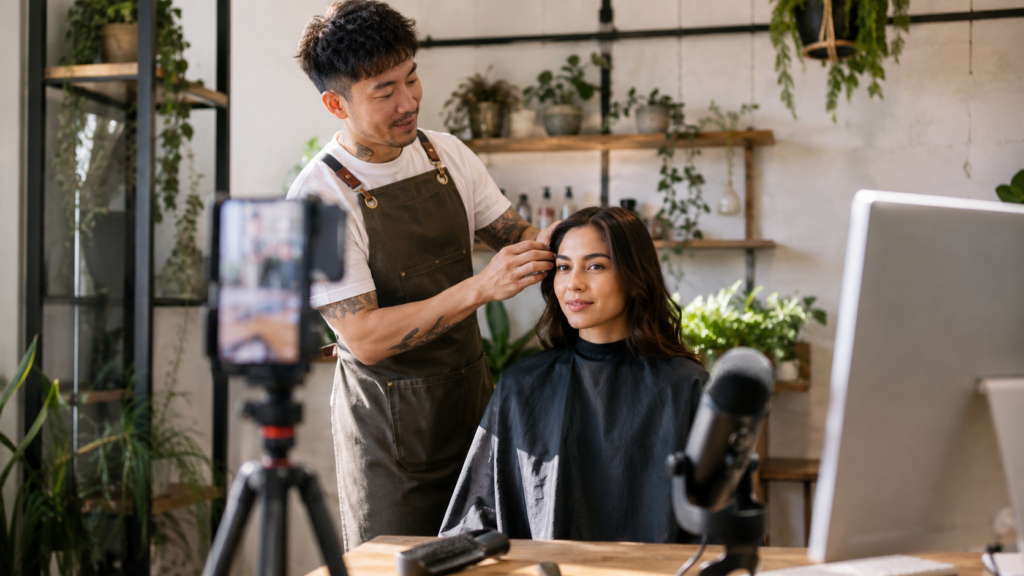
YouTube is the best option on this list for content with a long shelf life.
A Facebook update may disappear quickly. Meanwhile, a useful YouTube video can appear in searches for months or years. That makes YouTube valuable when customers research carefully before spending money.
Good subjects include:
- How a service works
- What a service costs
- Product comparisons
- Common problems and solutions
- Project walkthroughs
- Buying guides
- Customer questions
Imagine a homeowner researching basement waterproofing. A clear video explaining warning signs could introduce your company before the homeowner ever requests an estimate.
YouTube does require more effort. For instance, sound, lighting, titles, thumbnails, and editing all matter. Yet the video does not need to look like a Netflix documentary. It needs to be clear, helpful, and easy to follow.
Businesses can also reuse longer videos. One useful recording may become several Shorts, Instagram Reels, Facebook clips, email content, and a blog post. Suddenly, the production time looks much more reasonable.
Do Not Ignore Pinterest
Pinterest is less conversational than other platforms. People often use it to collect ideas and plan future purchases.
That behavior makes it useful for weddings, home design, recipes, fashion, crafts, travel, beauty, photography, and products. A pin may continue driving website visits long after it was published.
Still, Pinterest is not a natural fit for every business. An emergency plumber probably should not spend Thursday afternoon designing “10 Inspiring Sewer Backup Ideas.”
Use Pinterest when your customer saves ideas, compares styles, or plans a purchase over time.
What About Threads, X, Reddit, and Nextdoor?
These platforms can help. However, most small businesses should not start with all of them.
Threads is useful for conversation and short observations, especially if the business already has an Instagram audience. X can suit news-driven fields, public commentary, technology, and live events. However, both require frequent participation to build momentum.
Reddit is excellent for research. Customers openly discuss what they hate, what they want, what they tried, and why they rejected an option. Businesses should participate carefully because Reddit users can smell a disguised advertisement from several subreddits away.
Nextdoor may help neighborhood-based companies such as cleaners, landscapers, contractors, pet-care providers, and real estate professionals. Local recommendations carry weight there. However, businesses still need to follow community rules and avoid barging into every conversation with a coupon code.
The Best Social Media Platform by Business Type
Home-Service Companies
Start with Facebook and Instagram. Show real projects, answer homeowner questions, feature the team, and share local work. Add YouTube when customers need more education before requesting an estimate.
Restaurants
Instagram and Facebook make the strongest pair. Food is visual, while Facebook also supports local discovery, events, reviews, and community sharing. TikTok may help if the staff can produce lively kitchen or menu content.
Retail and E-Commerce
Instagram is a natural starting point. TikTok can drive discovery, and Pinterest can capture shoppers who are planning. The right mix depends on the product and customer.
Consultants and B2B Services
Choose LinkedIn first. Share useful opinions, lessons, case studies, and answers to expensive business problems. YouTube can support the strategy when deeper education builds trust.
Salons, Spas, and Beauty Businesses
Instagram and TikTok are strong because transformations and personality matter. Facebook can help reach local customers and maintain community visibility.
Healthcare and Wellness Practices
Facebook and Instagram can build familiarity, while YouTube works well for patient education. Keep privacy and industry rules in mind. A patient story is not “content” unless you have proper permission.
Real Estate Professionals
Instagram, Facebook, and YouTube each play a role. Use them for listings, neighborhood knowledge, buying advice, market explanations, and local personality—not only endless photos of agents holding keys.
You Probably Do Not Need Five Platforms
Trying to be everywhere is one of the fastest ways to become forgettable everywhere.
For most small businesses, one primary platform and one supporting platform are enough. The primary channel gets the original content and attention. The second receives content adapted for its users.
A contractor might lead with Facebook and support it with Instagram. Consultants could focus on LinkedIn, then turn deeper ideas into YouTube videos. Meanwhile, a boutique may use Instagram first and test TikTok for discovery.
Add another platform only when the current system works. Otherwise, you are not expanding a strategy. Instead, you are collecting neglected profiles.
Run a 90-Day Test
You do not have to marry a social media platform. Date it for 90 days.
First, choose one business goal. Next, select three or four content themes. Then publish consistently enough to learn what works.
Track more than likes. Look at:
- Profile visits
- Website clicks
- Calls and messages
- Appointment requests
- Email signups
- Store visits
- Qualified leads
- Sales connected to social media
Also note which subjects earn meaningful comments or questions. That response can reveal what customers care about, even when a post does not produce an immediate sale.
After 90 days, review the evidence. Did you reach the right people? Did website traffic grow? How many inquiries came from the platform? Which posts created actual conversations?
Finally, keep what works. Change what does not. If the platform is clearly wrong, move on without writing a dramatic farewell post.

Frequently Asked Questions
What Is the Best Social Media Platform for Small Business Owners Who Are Just Starting?
Facebook or Instagram is often the easiest starting point for a local consumer business. LinkedIn is usually better for B2B services. Choose one platform that fits the customer and the content you can realistically create.
Which Platform Is Best for Finding Local Customers?
Facebook is still valuable for local discovery, recommendations, community groups, events, and business pages. Instagram can also work well when photos and short videos help demonstrate the service.
Can a Small Business Succeed With Only One Platform?
Absolutely. One active, useful account is better than five profiles that look abandoned. A focused strategy also makes it easier to learn what customers respond to.
How Often Should a Small Business Post?
Post as often as you can maintain useful content and genuine engagement. Consistency matters more than chasing an arbitrary daily schedule that your team cannot sustain.
How Long Does Social Media Take to Work?
Give a new strategy at least 90 days before making a serious judgment. Some businesses see responses sooner, but trust and audience growth usually require repeated exposure.
Choose the Platform That Fits the Business
The best social media platform for small business growth is not always the largest platform. It is the place where the right audience, useful content, and a clear business goal meet.
Start with Facebook or Instagram if you serve local consumers. Choose LinkedIn for B2B buyers. Consider TikTok when personality and short video fit the brand. Use YouTube when customers need education before they buy. Explore Pinterest when people plan and save ideas related to your product or service.
Most importantly, choose a platform your business can use well. Social media should support the company—not become another hungry little creature that screams whenever it has not been fed in 24 hours.
If planning content, writing posts, creating visuals, managing accounts, and tracking results is stealing time from your business, Go Local Max can help. Our Social Media Management services give small businesses a practical strategy, consistent content, stronger customer connections, and reporting that shows what is actually working.
Schedule a free consultation with Go Local Max. Let’s build a social media plan that fits your business instead of forcing your business to fit every app.